
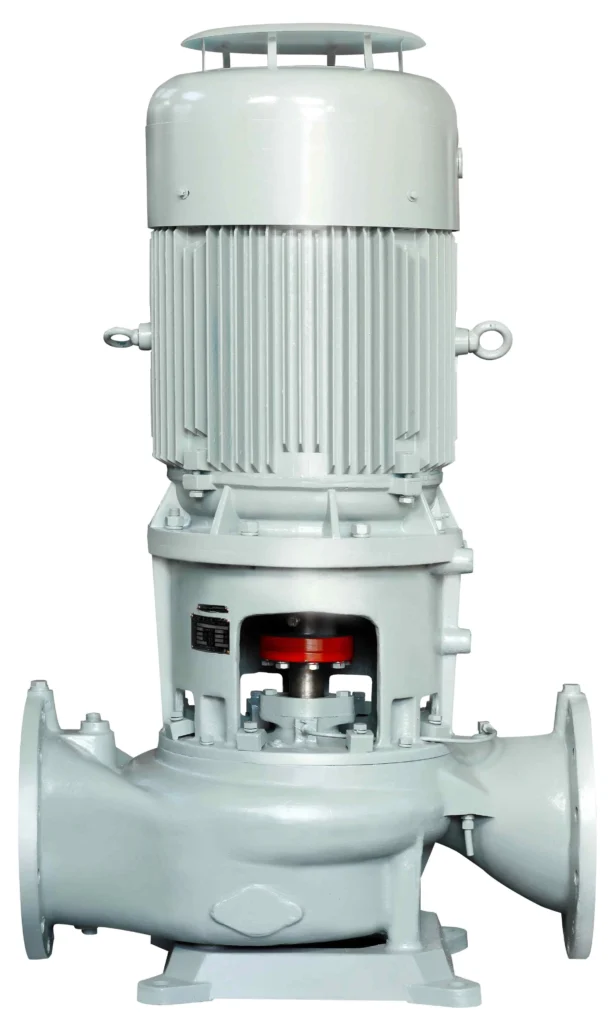
Short answer: the EMC is a vertical, single-stage marine centrifugal pump with the motor rigidly coupled to the pump, used for sea-water cooling, ballast, bilge and general service. CTP builds the EMC series on marine centrifugal technology licensed from Taiko (Japan) in 1994. To order EMC pump spare parts, or to replace a whole EMC pump, send the full model code from the nameplate, the serial number and the part numbers from the sectional drawing. With those three items the part and its material can be identified without guesswork.
This guide explains how to read an EMC model code, which numbered parts wear in service, and what to send when you need spares or a complete replacement.
What the EMC series is
The EMC is a vertical single-stage single-suction centrifugal pump. Because the motor is rigidly coupled to the pump shaft, there is no separate bearing frame to align, and the unit stands on a small footprint in the engine room. According to the CTP marine centrifugal pump selection manual, the series covers:
- flows from 5 to 450 m³/h and heads up to 150 m;
- speeds of 1,450 / 2,950 rpm on 50 Hz and 1,750 / 3,550 rpm on 60 Hz;
- liquid temperatures up to 80 °C, sea water or fresh water;
- services including sea-water and fresh-water cooling, ballast, bilge, general service and air-conditioning cooling, with fire and general service where the ship specifies it;
- an optional self-priming device: an air ejector or a vacuum pump.
The EMC is one of the core series on our marine ballast pump page, and the full range is on the marine centrifugal pumps page.
The Taiko technology background
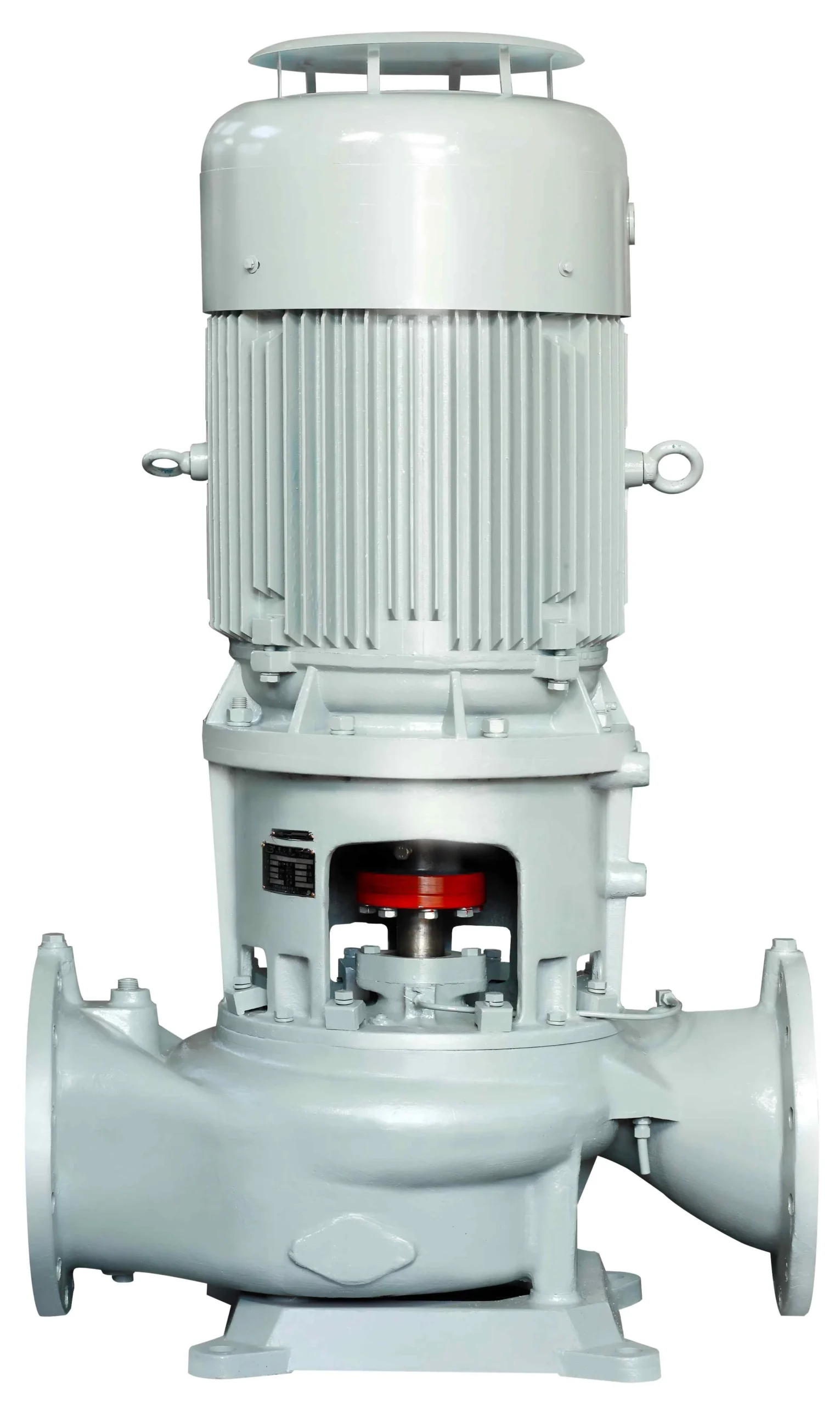
CTP (Tianjin Pumps & Machinery Group), founded in 1956, made China’s first marine centrifugal pump. In 1994 it licensed marine centrifugal and gear pump technology from Taiko of Japan, and its current marine centrifugal series, including the EMC, build on that technology. The marine centrifugal range has been certificated by BV, CCS, DNV, GL, LR and ZY; survey by another requested classification society can be arranged.
One caution for buyers: a series name on a nameplate does not prove that two pumps are interchangeable. Different builds of the same series can differ in impeller, seal, material and motor. Every replacement part or pump is therefore confirmed against the nameplate and, where available, the installation drawing of the pump on board.
How to read an EMC model code
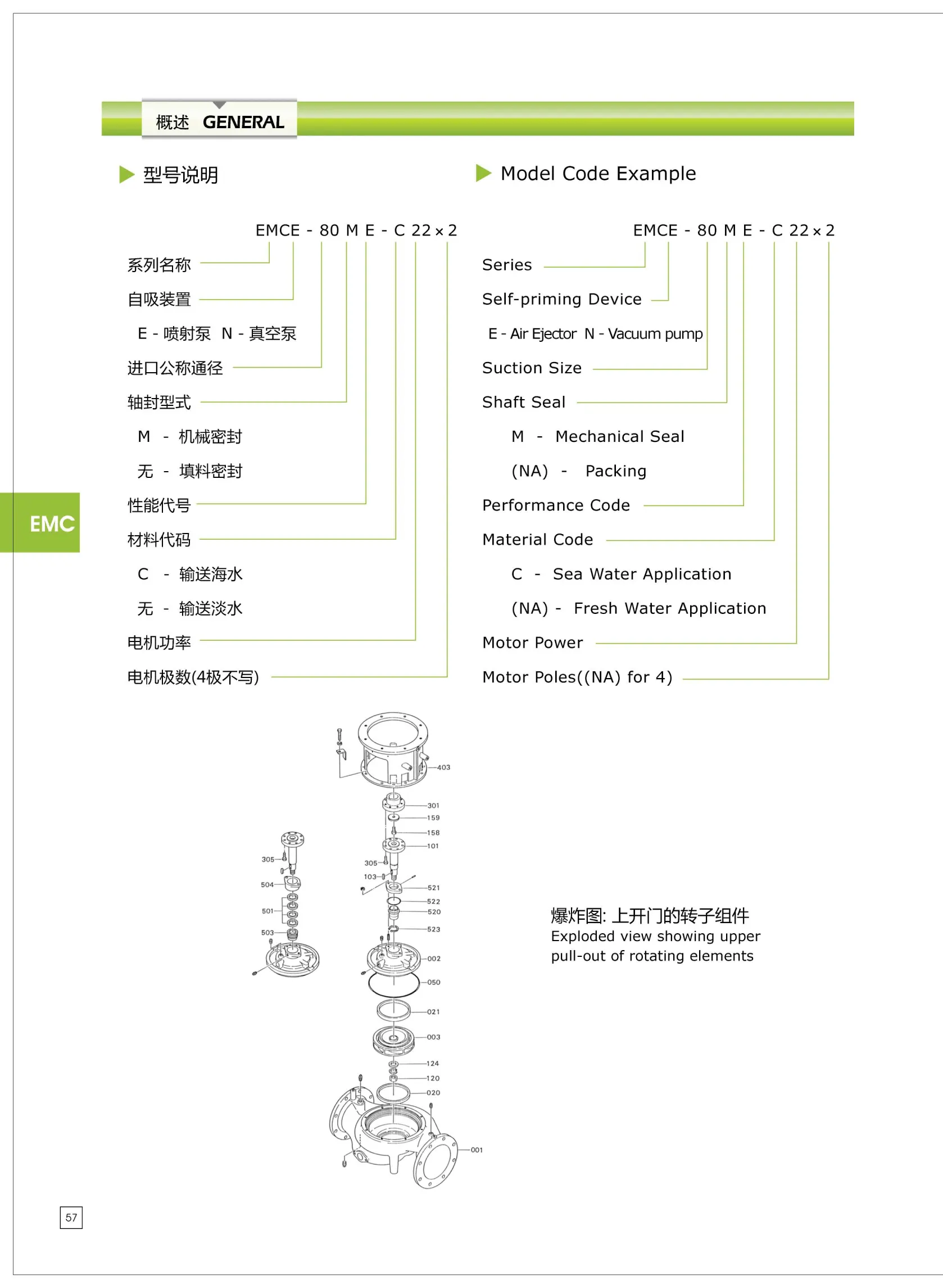
The model code on the nameplate carries most of the information needed to identify parts. Taking EMCE-80 M E-C 22×2 as an example:
| Code element | Example | Meaning |
|---|---|---|
| Series | EMC / EMCE | Series code; the added “E” indicates a self-priming arrangement |
| Suction size | 80 | Suction nozzle size in mm |
| Shaft seal | M | M = mechanical seal; packed pumps carry a different letter |
| Performance code | E | Hydraulic performance within the size |
| Material code | C | C = sea-water materials; no letter = fresh-water materials |
| Motor | 22×2 | Motor power in kW × number of poles |
The material code matters most for spares. A sea-water (C) pump has a bronze casing and casing cover; the fresh-water build uses cast iron for the same two parts. Ordering the wrong material is the most common spare-parts mistake.
EMC numbered parts and materials
Every EMC sectional drawing carries numbered parts. Quote these numbers in an enquiry, together with the model code, and the part is identified exactly.
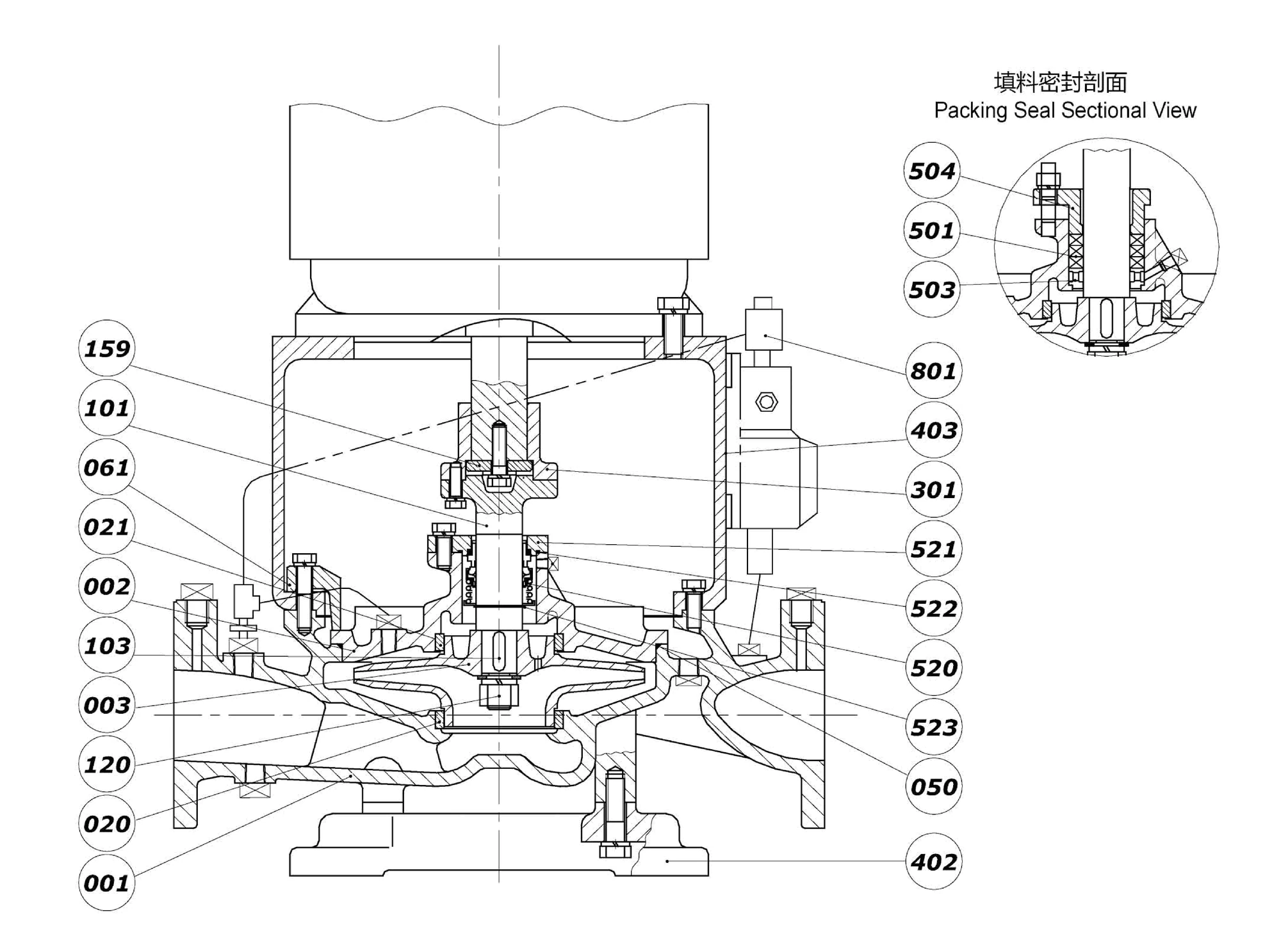
| No. | Part | Material (S.W. / F.W.) |
|---|---|---|
| 001 | Pump casing | Bronze / Cast iron |
| 002 | Casing cover | Bronze / Cast iron |
| 003 | Impeller | Bronze |
| 020, 021 | Wear rings | Bronze |
| 050 | O-ring | NBR |
| 061 | Fixing plate | Carbon steel |
| 101 | Shaft | Stainless steel |
| 103 | Impeller key | Stainless steel |
| 120 | Impeller nut | Stainless steel |
| 159 | Stopper ring | Carbon steel |
| 301 | Rigid coupling | Carbon steel |
| 402 | Pump bed | Cast iron |
| 403 | Frame | Cast iron |
| 501 | Packing | Carbonized fiber |
| 503 | Lantern ring | Bronze |
| 504 | Packing cover | Bronze |
| 520 | Mechanical seal | Seal faces: SiC + SiC |
| 521 | Mechanical seal cover | Bronze |
| 522 | O-ring | NBR |
| 523 | Retaining ring | Stainless steel |
| 801 | Self-priming device | Self-priming builds only |
Materials as listed in the CTP EMC parts and materials table. Other material combinations are available on request.
Which parts wear in service
In sea-water service the parts replaced most often are the ones that see flow, sediment and sliding contact:
- Wear rings (020, 021) — the clearance between impeller and casing grows with wear, and flow and head fall with it. Renewing the rings restores the clearance without replacing the impeller or casing.
- Mechanical seal (520) or packing (501) — rising leakage is the signal. Replace the seal as a set with its O-rings (522) and check why it failed: dry running, sediment or pressure beyond its rating.
- Impeller (003) — replace when vanes are eroded or cavitation-pitted.
- O-rings (050, 522) — renew whenever the pump is opened.
Because the motor is rigidly coupled, bearing condition is part of the motor rather than a separate pump bearing frame; check it with the motor maintenance.
Spare parts or a complete replacement?
Spares make sense when the casing is sound and the duty has not changed. A complete replacement pump is the better route when the casing is corroded or cracked, when several major parts are worn at once, or when the duty has changed. A new ballast water treatment system in the line, for example, adds head; see our guide to ballast pump vs ballast stripping pump.
For a complete replacement, the new pump must match the existing flange positions, foundation, height and motor supply. Our marine centrifugal pump replacement guide covers the seven compatibility checks to run before ordering.
What to send with an EMC spares or replacement enquiry
- Photo of the pump nameplate and the motor nameplate
- Full model code and serial number
- Part numbers from the sectional drawing, with quantities
- Service (sea water or fresh water) and the duty point, if known
- Vessel name and IMO number, and the classification society
- Delivery port or address
- For a complete replacement: installation photos, flange sizes and the foundation layout
Technical documentation is on our downloads page.
FAQ
Is the CTP EMC pump related to Taiko?
CTP licensed marine centrifugal pump technology from Taiko (Japan) in 1994, and its marine centrifugal series, including the EMC, are built on that technology. Whether a CTP part or pump fits a specific installed pump is confirmed against its nameplate and drawing.
How do I find the right EMC spare part?
Read the full model code and serial number from the nameplate, then take the part number from the sectional drawing, for example 003 impeller, 020 / 021 wear rings or 520 mechanical seal. Send all three.
What does the “C” in an EMC model code mean?
C marks a sea-water build with a bronze casing and casing cover. A model code without C is a fresh-water build with cast-iron casing and cover.
Can an EMC pump be made self-priming?
Yes. EMC pumps can be supplied with a self-priming device, either an air ejector or a vacuum pump. Self-priming builds carry an extra letter in the series code, as in EMCE.
What flow and head does the EMC series cover?
5 to 450 m³/h and heads up to 150 m, at 50 Hz or 60 Hz, for liquids up to 80 °C.
Send your EMC pump data to CTP
Send the nameplate photo, part numbers and quantities, and our engineers will identify the parts and quote. For a complete replacement, submit the duty and installation data through pump selection assistance, or contact CTP Pumps directly.
Published by CTP Pumps · Sources: CTP marine centrifugal pump selection manual; CTP EMC parts and materials table; CTP product brochure · Last reviewed: October 18, 2026