
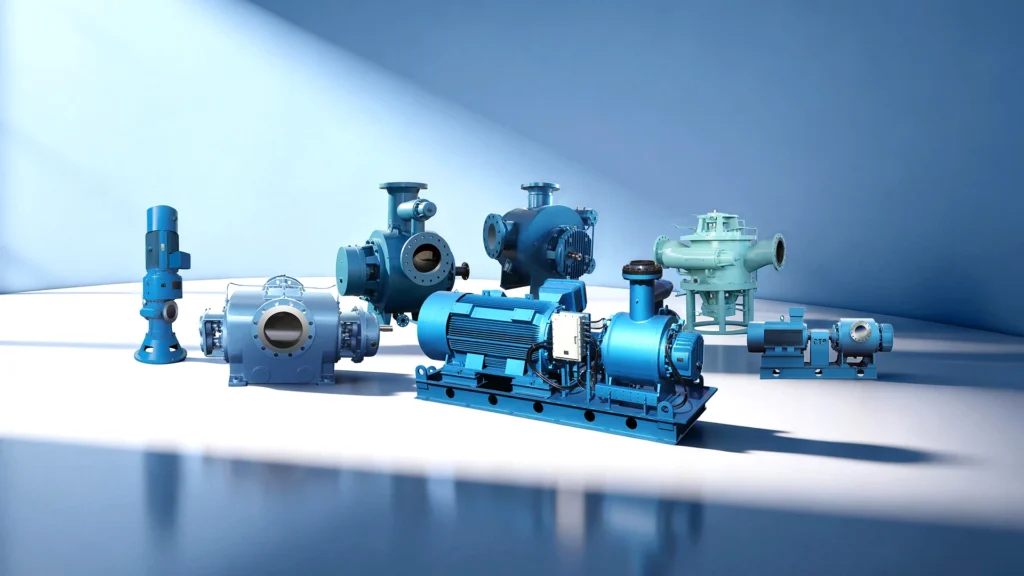
Choosing the right screw pump is not only a question of flow rate and pressure. For lubricating oil, fuel oil, hydraulic oil, bitumen, resin, and other high-viscosity fluids, the pump must keep a stable flow while protecting the medium, the mechanical seal, and the downstream equipment.
This guide explains how engineers and procurement teams can compare three screw pumps, twin screw pumps, and eccentric helical rotor pumps for demanding industrial transfer and circulation duties.
Why Screw Pumps Are Used for Viscous Fluids
Screw pumps are positive displacement pumps. Instead of relying mainly on centrifugal force, they move fluid through sealed cavities formed by rotating screws. This makes them suitable for applications where the fluid is thick, the flow must remain steady, or the system needs reliable suction performance.
Typical applications include lubricating oil circulation, fuel oil transfer, refinery storage, marine fuel systems, hydraulic power units, chemical dosing, and industrial heating systems. Compared with many centrifugal pump selections, screw pumps can provide smoother flow and better handling of changing viscosity.
Start With the Fluid, Not the Pump Model
Before selecting a screw pump, define the working fluid clearly. The most important parameters are viscosity, temperature, lubricity, solids content, corrosiveness, vapor pressure, and whether the liquid contains gas or entrained air.
- Viscosity: Higher viscosity usually requires lower speed, stronger drive sizing, and careful suction pipe design.
- Temperature: Hot oil or heated bitumen may need special clearances, seals, and material selection.
- Lubricity: Clean lubricating oils are usually easier for screw pumps than low-lubricity fuels or solvents.
- Solids: Hard particles can damage precision screw profiles, so filtration or a different pump type may be needed.
- Gas content: Twin screw pumps are often considered when liquid contains gas or when suction conditions are unstable.
Three Screw Pump: Best for Clean Oil and Stable Flow
A three screw pump is often the first choice for clean lubricating oil, fuel oil, diesel oil, turbine oil, hydraulic oil, and similar fluids. It is valued for low pulsation, quiet operation, compact structure, and stable metering-like flow.
For lubrication systems, the main goal is not simply to move oil. The pump must keep a constant oil film supply to bearings, gearboxes, compressors, turbines, and heavy rotating equipment. A three screw pump can help maintain a smooth oil supply with less vibration in the pipeline.
Choose a three screw pump when the fluid is relatively clean, the process requires continuous operation, and low noise or low pulsation matters. It is commonly used in power plants, marine systems, petrochemical plants, steel mills, and general machinery lubrication systems.
Twin Screw Pump: Better for Difficult Transfer Conditions
A twin screw pump is often selected for higher flow transfer, multiphase service, low NPSH margin, or applications where gas may be present in the liquid. It can also be configured for heavy oil, crude oil, fuel oil, and process fluids with broader working conditions.
Because twin screw pumps can be designed with external bearings and timing gears, the screws do not need to contact each other. This can be useful for fluids that are less lubricating or more sensitive than standard lubricating oil.
Consider a twin screw pump when the application involves unloading, loading, long-distance transfer, oilfield service, tank farm operation, or marine fuel transfer where operating conditions may vary.
Eccentric Helical Rotor Pump: Useful for Very Thick or Shear-Sensitive Media
An eccentric helical rotor pump, also known as a single screw pump or progressive cavity pump, is suitable for very viscous, shear-sensitive, or particle-containing fluids. It is widely used for sludge, polymer solutions, adhesives, food-related media, wastewater, and chemical mixtures.
For clean oil systems, a three screw pump is usually more compact and efficient. For very thick or non-clean fluids, a progressive cavity pump may provide better tolerance. The decision depends on the medium, speed, pressure, and maintenance expectations.
Quick Selection Table
| Application | Recommended Pump Type | Reason |
|---|---|---|
| Lubricating oil circulation | Three screw pump | Stable, low-pulsation flow for continuous oil supply |
| Fuel oil transfer | Three screw pump or twin screw pump | Depends on flow rate, viscosity, suction condition, and gas content |
| Heavy oil or crude oil transfer | Twin screw pump | Suitable for high flow and variable operating conditions |
| Hydraulic oil system | Three screw pump | Smooth pressure and quiet operation |
| Sludge or polymer solution | Eccentric helical rotor pump | Good for thick, shear-sensitive, or particle-containing media |
Do Not Ignore Suction Conditions
Many pump problems start on the suction side. For high-viscosity fluids, suction piping should be short, direct, and large enough to reduce pressure loss. Sharp elbows, undersized strainers, long horizontal runs, and cold startup conditions can all create cavitation or insufficient filling.
If the liquid becomes much thicker at low temperature, the pump may need preheating, reduced startup speed, a bypass line, or a motor sized for the highest expected viscosity. These details are especially important for fuel oil, asphalt, resin, and heavy lubricating oil.
Key Data to Send Before Requesting a Quotation
To get a reliable pump recommendation, prepare the following information before contacting a manufacturer:
- Fluid name and chemical properties
- Viscosity range at minimum, normal, and maximum temperature
- Required flow rate and differential pressure
- Suction pressure, discharge pressure, and pipe layout
- Operating temperature and ambient conditions
- Solids content, gas content, and filtration level
- Power supply, motor standard, and installation location
- Seal preference, material requirements, and industry standard
How CTP Pumps Supports Screw Pump Selection
CTP Pumps manufactures a wide range of industrial positive displacement pumps, including three screw pumps, twin screw pumps, eccentric helical rotor pumps, gear pumps, and centrifugal pumps. With multiple pump series and application experience in oil, marine, power, chemical, and machinery industries, CTP can help match the pump structure to the actual working condition.
If you are comparing pump types for lubricating oil, fuel oil, heavy oil, or another high-viscosity fluid, send your working condition to the pump selection assistance team. For urgent projects, you can also reach CTP through the contact page.
Final Recommendation
For clean lubricating oil and stable circulation systems, start with a three screw pump. For high-flow transfer, gas-containing liquids, or difficult suction conditions, evaluate a twin screw pump. For very thick, shear-sensitive, or particle-containing media, consider an eccentric helical rotor pump.
The best selection comes from matching pump type, speed, material, seal, drive power, and suction design to the real fluid condition. A small amount of accurate process data at the beginning can prevent vibration, overheating, cavitation, seal failure, and unexpected downtime later.