
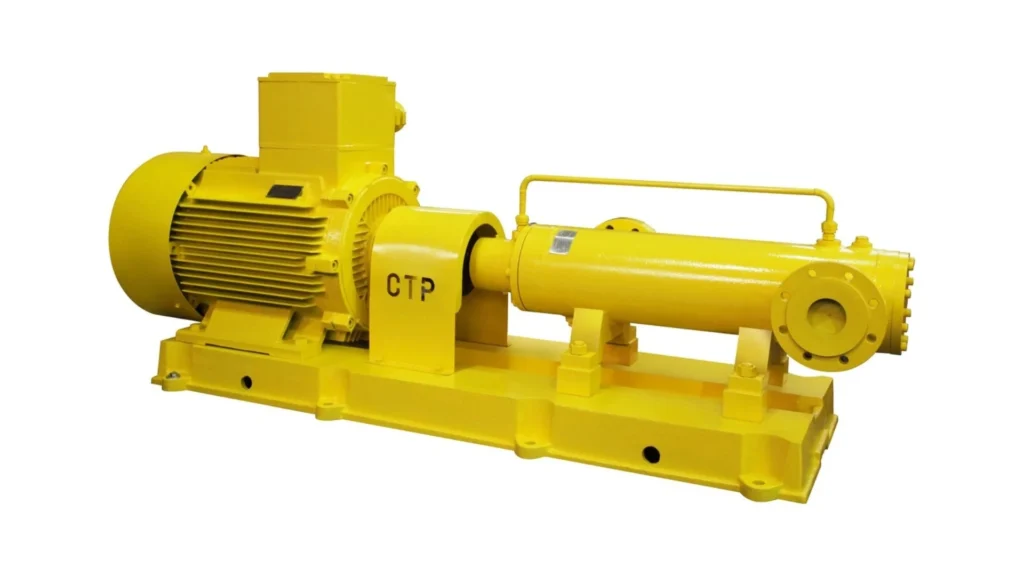
MAINTENANCE GUIDE | OIL TRANSFER AND LUBRICATION SYSTEMS
Three screw pump troubleshooting should begin with the system, not with immediate pump disassembly. Suction-line air leakage, a restricted strainer, unsuitable liquid temperature, incorrect rotation or a discharge-side restriction can create symptoms that look like internal pump damage.
This guide turns CTP Pumps’ internal three screw pump training material into a practical screening workflow for marine and industrial oil systems. It covers pre-start checks, cavitation and air ingress, low flow, unstable pressure, vibration, overheating, leakage and seizure. Always use the operating manual for the selected pump series and follow the site’s lockout, isolation and safety procedures before inspection.
How a Three Screw Pump Moves Liquid
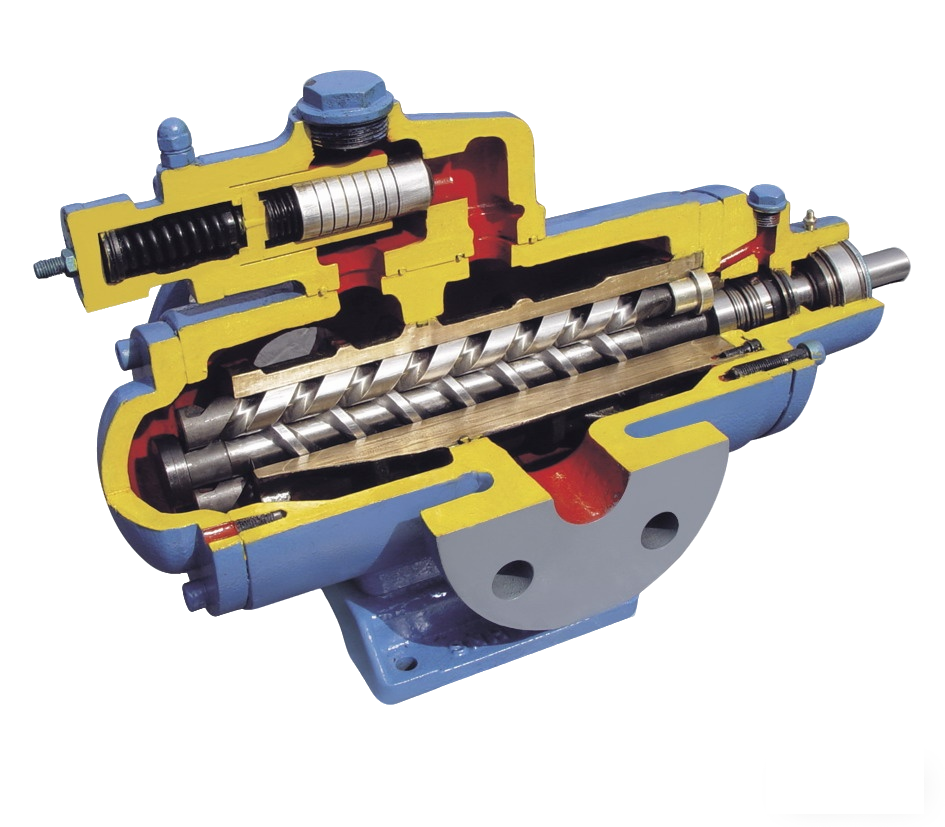
A three screw pump uses one drive screw and two idler screws inside a closely fitted bore. Their rotation forms sealed cavities that move liquid continuously along the screw axis from the low-pressure side to the high-pressure side. This axial positive-displacement action explains why suction conditions, lubrication, clearances and liquid viscosity matter during troubleshooting.
CTP’s published three screw pump range is intended for selected clean, lubricating liquids and includes multiple series and installation arrangements. Do not apply one maintenance limit, viscosity range or pressure rating to every series.
Three Screw Pump Troubleshooting: Symptom-to-Check Table
| Observed symptom | First checks | Possible next action |
|---|---|---|
| Pump does not pick up liquid | Priming, rotation, suction valve, suction-line tightness, tank level and strainer | Correct the external condition before inspecting internals |
| Pressure gauge fluctuates or noise increases | Air ingress, suction restriction, liquid temperature, gas in the liquid and cavitation | Stop if the condition is severe; restore suction conditions |
| Flow rate falls | Suction leakage or blockage, speed, viscosity/temperature, relief-valve bypass, seal leakage | Confirm system data; inspect wear only after external causes are excluded |
| Power rises sharply | Discharge restriction, excessive viscosity, abnormal internal rubbing | Stop and investigate instead of continuing under overload |
| Abnormal vibration | Cavitation, suction air leakage, alignment and internal clearances | Correct the hydraulic cause or arrange inspection |
| Pump or bearing area overheats | Liquid temperature, relief-valve recirculation, discharge pressure, lubrication and bearing condition | Stop if temperature is abnormal; do not mask the cause |
| Pump seizes | Dry running, foreign material, loss of lubricity, bearing failure or internal contact | Disconnect power and inspect; do not repeatedly restart |
Pre-Start Maintenance Checklist
A disciplined startup prevents many failures that later appear to require repair.
- Complete the routine visual and mechanical inspection required by the pump manual.
- Confirm that the pump shaft or coupling can be turned as specified for the unit.
- Verify the required suction and discharge valve positions.
- Check whether the oil temperature and viscosity are suitable for startup.
- Inspect the suction filter or strainer for restriction.
- Prime the pump with the conveyed liquid where the manual requires it.
- Check connected equipment, instrumentation and the system route.
- Jog the motor to confirm rotation before continuous operation.
Never intentionally dry-run a standard three screw pump. The conveyed liquid supports sealing and lubrication inside the pumping elements. If a special unit has a different operating capability, rely only on its series-specific documentation.
Why a Three Screw Pump Does Not Pick Up Liquid
If the pump does not establish flow, check the installation before assuming that the screws are damaged:
- Incorrect motor rotation: compare the rotation with the directional marking and the manual.
- Missing or inadequate priming: confirm that the pump contains the conveyed liquid before startup where required.
- Air entering the suction side: inspect the suction pipe, flange joints, instrument connections and seals.
- Blocked or restricted suction: verify valve position and inspect the strainer and pipework.
- Excessive suction lift or inadequate inlet pressure: compare the actual installation with the selected pump’s suction requirements.
- Viscosity too high at startup: confirm actual liquid temperature and viscosity; do not heat a liquid unless the process and pump documentation permit it.
Cavitation vs Air Ingress: Similar Symptoms, Different Causes
Air ingress
Air may enter through a leaking suction flange, instrument connection, pipe joint or seal. The result can include reduced flow, unstable pressure, unusual vibration and noise. Tightness testing and visual inspection of the entire suction route should come before internal dismantling.
Cavitation
Cavitation occurs when the available suction conditions are insufficient for the liquid at its operating temperature. Long or undersized suction piping, restrictive valves and fittings, a blocked filter, excessive suction lift or higher vapor pressure can reduce available suction margin.
A practical distinction
Both conditions can make gauge needles fluctuate and produce abnormal sound. Air ingress points to a leak or gas entering the suction stream; cavitation points to inadequate pressure at the pump inlet. Check tank level, liquid temperature, strainer condition, pipe losses and suction tightness together.
How to Diagnose Reduced Flow
A lower flow reading does not automatically prove internal wear. Use this order:
- Confirm the measurement and compare current speed, pressure, temperature and viscosity with the normal operating record.
- Check for suction-side leakage, partial valve closure and strainer blockage.
- Look for signs of cavitation or gas entering the liquid.
- Confirm that the motor supply and speed match the equipment requirement.
- Check whether the relief valve is bypassing or not fully seated. Do not change its setting without authorization.
- Inspect the mechanical seal for abnormal leakage.
- Only then evaluate screw and bore wear or other internal clearance changes.
Record the duty data before making changes. Flow, differential pressure and absorbed power can change with viscosity and temperature, so a nameplate comparison without current liquid data may be misleading.
Why Pressure Becomes Unstable
Pressure instability can result from suction-side air, cavitation, gas in the liquid, a restricted inlet or a relief valve that opens and closes around the operating pressure. A mismatch between actual viscosity and the selected duty can also affect system behavior.
Do not use the relief valve as a routine flow-control device and do not adjust a factory-set valve without the required procedure. If the valve is continuously recirculating because the discharge path is restricted, the liquid and pump can heat quickly.
Abnormal Noise and Vibration
Noise and vibration require prompt attention because hydraulic and mechanical faults can overlap. Check:
- suction-line air leakage and blockage;
- cavitation caused by inadequate inlet conditions;
- pump and driver alignment;
- foundation and pipe support;
- bearing condition;
- internal screw-to-bore contact or excessive clearances.
If vibration or noise changes suddenly, or accompanies a rapid current increase, stop the unit safely and investigate. Continuing to run can turn a system problem into internal damage.
Three Screw Pump Overheating Checks
Abnormal temperature at the casing, seal or bearing area can be associated with:
- continuous relief-valve recirculation;
- operation above the selected differential pressure;
- liquid entering above the approved temperature;
- excessive viscosity and power demand;
- blocked seal-return or circulation passages where fitted;
- bearing distress;
- internal rubbing caused by damage, contamination or misalignment.
Temperature is a symptom, not a setting to override. Confirm where the heat is concentrated and correlate it with pressure, current, sound and recent process changes.
When Immediate Shutdown Is the Safer Response
Arrange a controlled shutdown when there is major seal leakage, obvious cavitation that cannot be corrected promptly, abnormal vibration or noise, rapid temperature rise, sudden overload, loss of pressure or flow, relief-valve recirculation caused by a blocked discharge path, or pump seizure.
For a seized pump, isolate electrical power and do not keep jogging or restarting the motor. Document pressure, temperature, current, valve positions and visible evidence before dismantling; these records help distinguish the initiating cause from the resulting damage.
Preventive Maintenance Records to Keep
- Normal suction and discharge pressure.
- Flow rate and motor current at a known liquid temperature.
- Liquid name, viscosity and operating temperature.
- Strainer inspection and cleaning history.
- Seal leakage observations.
- Bearing and casing temperature trends.
- Noise and vibration changes.
- Relief-valve events and discharge restrictions.
- Maintenance actions and replaced parts.
A trend is more useful than a single reading. Establishing a normal baseline makes early changes easier to recognize.
Frequently Asked Questions
Can a three screw pump run dry?
Do not assume so. CTP’s general three screw pump training warns against dry running because the conveyed liquid supports sealing and lubrication. Follow the selected series manual for any special operating capability.
What causes a three screw pump to lose flow?
Common screening checks include suction leakage or blockage, cavitation, incorrect speed, a bypassing relief valve, seal leakage, viscosity or temperature change and internal wear.
Why is the pressure gauge fluctuating?
Possible causes include suction-side air ingress, gas in the liquid, cavitation, inlet restriction or relief-valve instability. Inspect the suction system before dismantling the pump.
Why is a screw pump overheating?
Investigate relief-valve recirculation, excessive differential pressure, high liquid temperature, excessive viscosity, bearing problems, blocked seal circulation and internal rubbing.
What information should I send for technical support?
Provide the pump model and serial information, liquid, viscosity and temperature, flow, suction and discharge pressure, speed, motor current, installation arrangement, symptom history, photographs and any recent system changes.
Get Series-Specific Troubleshooting Support
This checklist supports first-line diagnosis but does not replace the operating manual or a series-specific engineering review. For new selection or replacement, compare the actual fluid and duty with CTP’s three screw pump product families. For an application review, submit the system data through CTP Pump Selection Assistance.
You can also review how a three screw pump works before diagnosing symptoms linked to suction, lubrication and internal clearances.
Request three screw pump selection or troubleshooting support from CTP Pumps